Fred Lackey (Tallahassee, FL) |
| My life took a turn for the
better when I met Mr. and Mrs. Fred Lackey. They have
teamed up to make syrup for a long, long time, and have
had an annual Fun Day (by invitation) since 1980. They
pretty well define "good folks." As mentioned, the Lackeys have made syrup for a long time and they do it now on a small commercial scale. They are a team and it was great fun to listen to their routine, which is one I'd like to emulate (". . . by daylight, I have the first kettle ready to cook and she brings a breakfast biscuit, and we start skimming"). The Lackeys have a limited production and do not ship, which is too bad because I have never tasted better sugar-cane syrup. |
(click on images for larger version) |
|
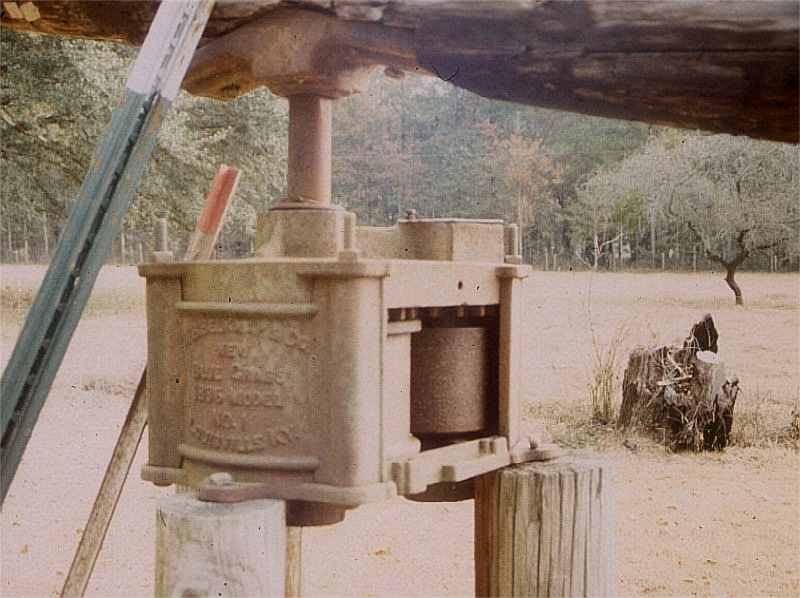
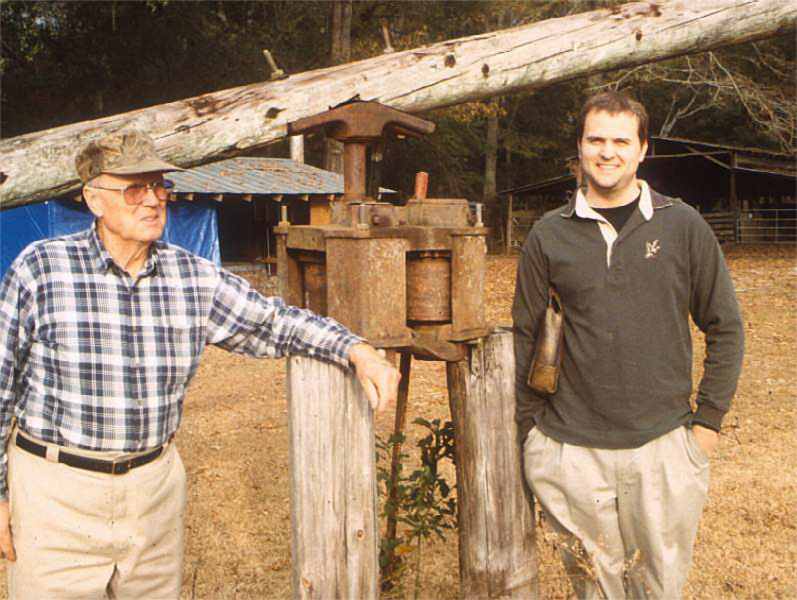
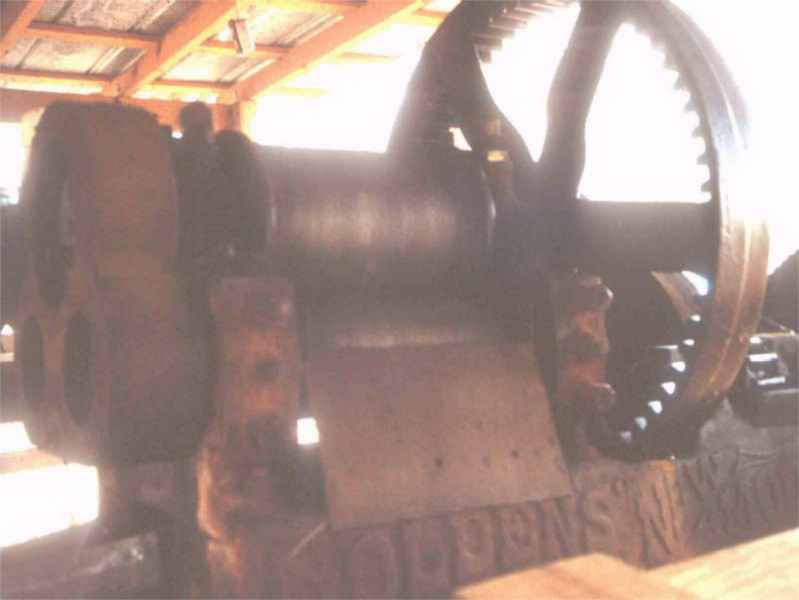
| Pictured above-Belknap Co., New BlueGrass 1896 Model # 1 (Louisville KY). The Lackeys do not use this mill; it is part of a collection of antique farm implements. Pictured are Mr. Lackey and Will Outlaw. |
|
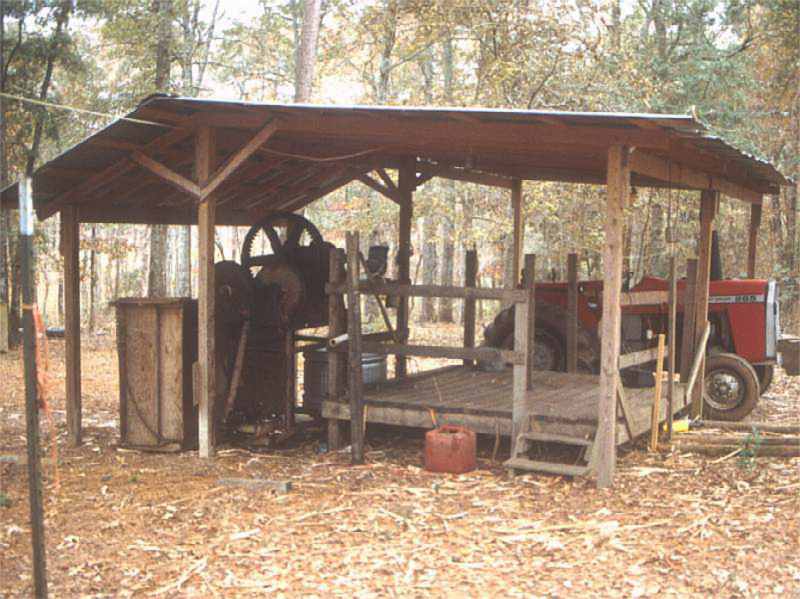
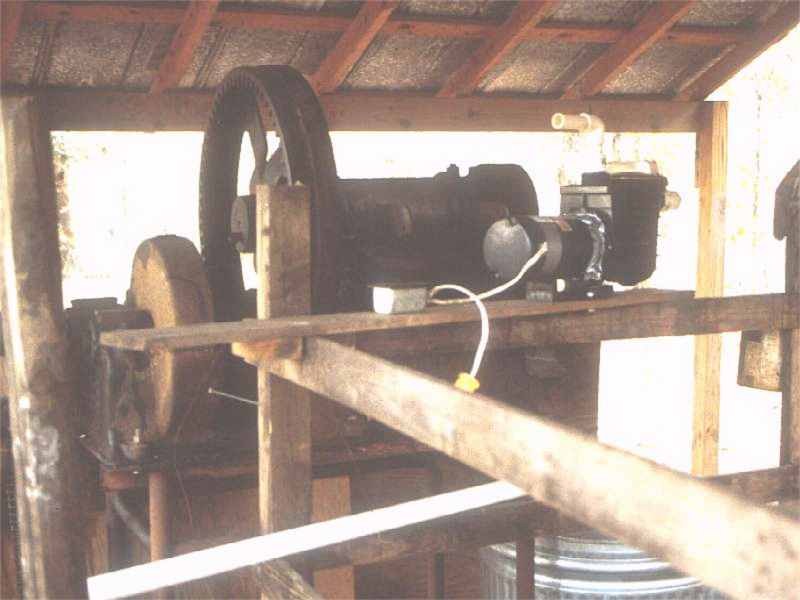
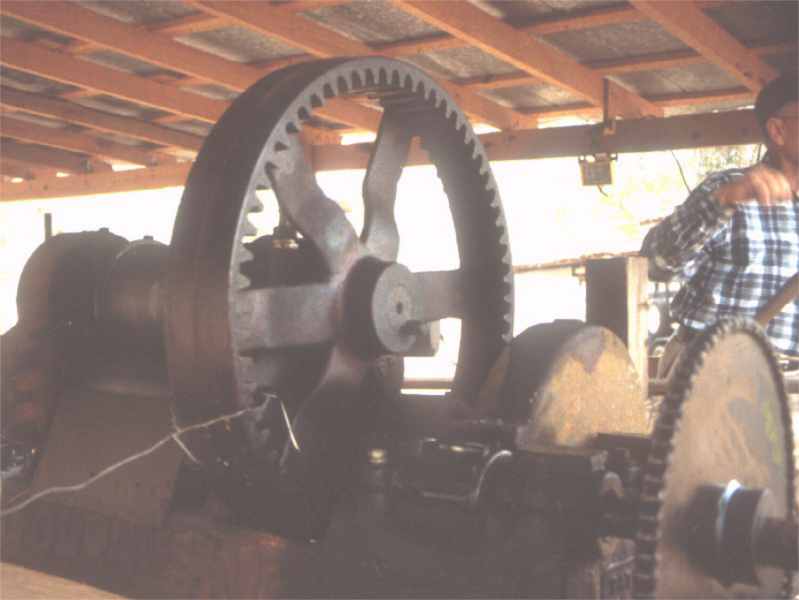
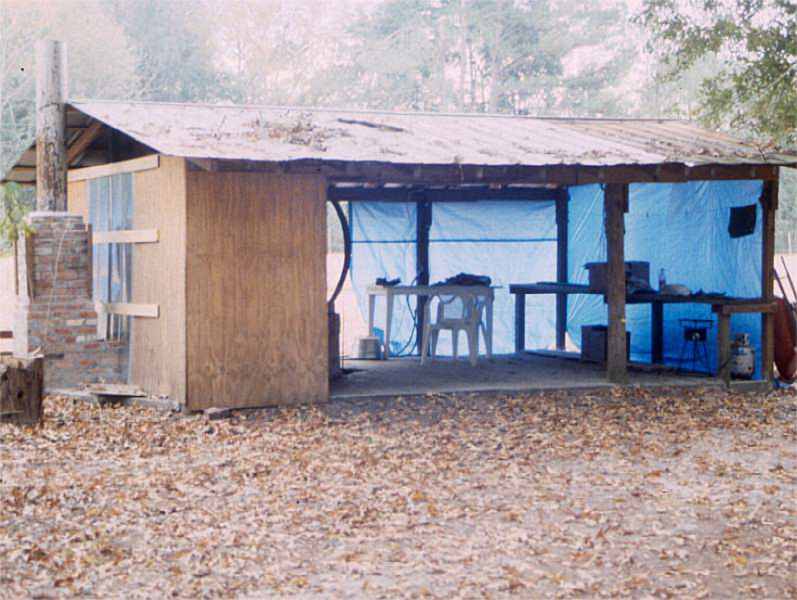
| Pictured above is the Lackey grinding shed and his Golden # 27. This mill is in excellent condition. The gears are not worn and he has replaced the bearings. Interestingly, he drilled a hole through the top of the horizontal bearings to allow lubricant to reach the friction points. |
|
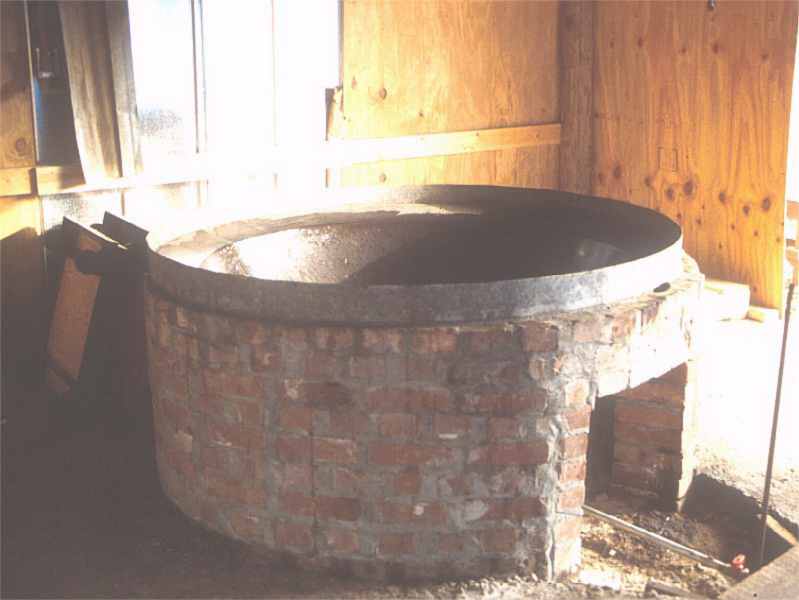
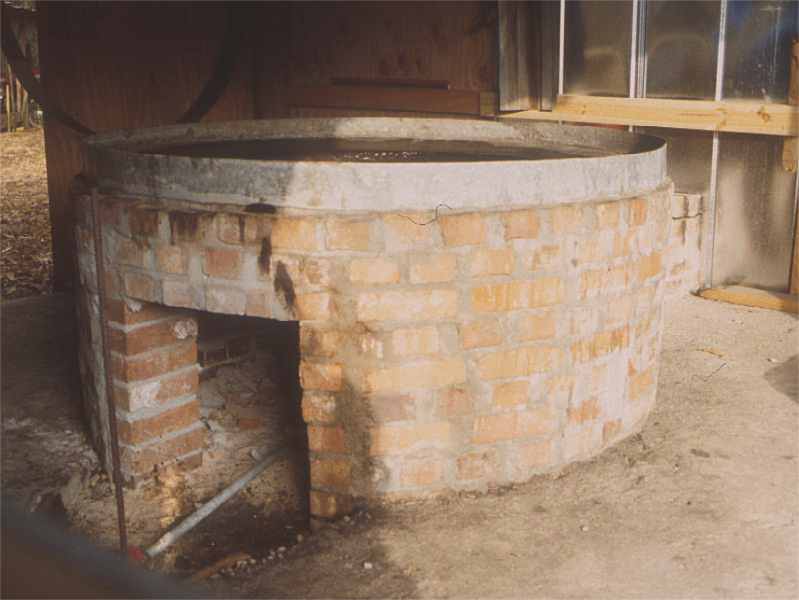
| Above pictures show the
Lackey syrup shed and close-ups of the Lackey 80-gallon
kettle. It takes a little less than 200 feet of cane (row
spacing at 4.5 feet) to fill the kettle. Note that this
kettle also has a second rim, as described for the
Bradley, Bennett and other kettles. The burners are
fashioned from grease fittings that have been ground down
to open them up. Mr. Lackey uses a numbered variety of cane from IFAS (Quincy, FL) and grows it without irrigation. He fertilizes three times each year with a low-nitrogen fertilizer that does not contain ammonium. Most syrup makers judge when the syrup is ready to "take up" by simple visual inspection (how it boils or how it drips off a scoop). Mr. Lackey uses a thermometer (226 ºF). I took the boiling point of his syrup, and it was dead on 226 ºF, which corresponded to 24.2 % water on my honey refractometer. (Data from my inexpensive honey refractometer should not be overinterpreted. Syrup refractometers can be purchased from Leader Evaporator Co. and perhaps other suppliers.) The Lackey syrup is a little thinner than average, and a two-year-old sample was not granulated. Syrup that is too thick granulates whereas that which is too thin is perishable; a commercial sample that I purchased this year molded within 3 weeks! Another quantitative method of judging syrup is by use of a hygrometer. Jerry Griffin uses this method and takes his syrup up when the reading reaches 34. |