Mr. Leslie Herold (Tallahassee, FL)
Click on images for larger view |
|
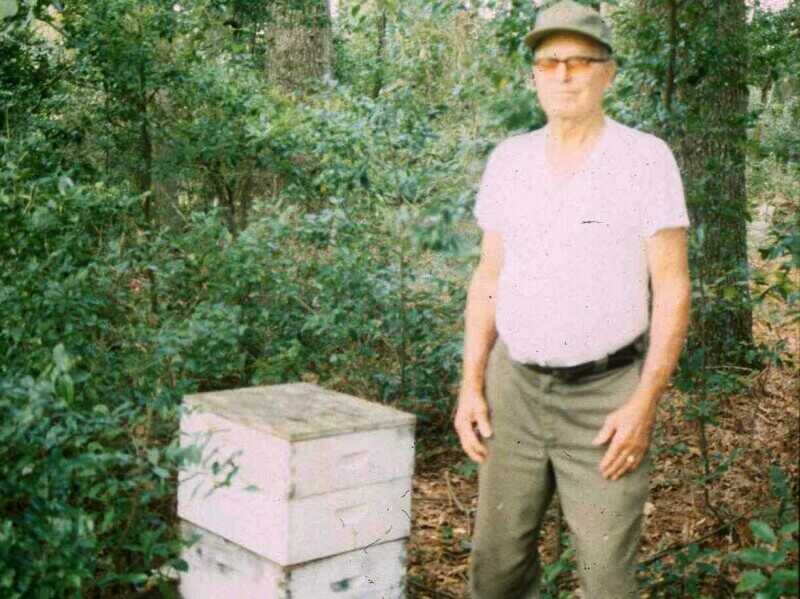 |
Picture left, shows Mr. Herold with his bee colony. Like the rest of us, he is plagued by exotic mites, particularly varroa. |
|
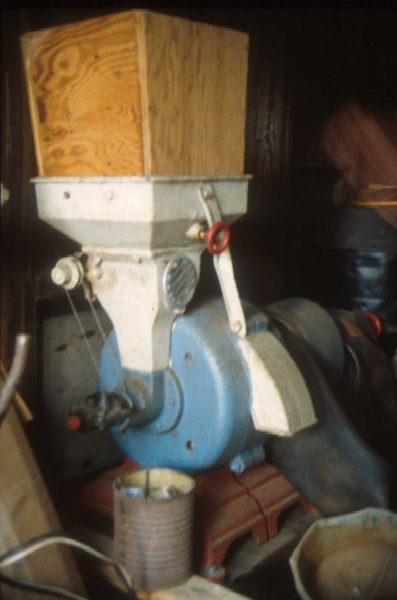
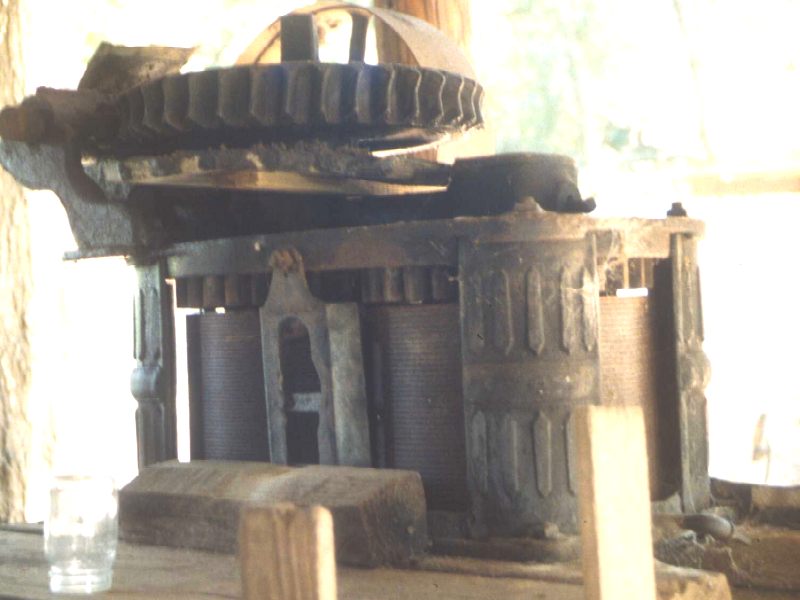
This picture was taken in near darkness in a shed. Although it is also not syrup-related, most of you will be interested in this grist mill, which his father ran once each week when folks would bring corn over. |
|
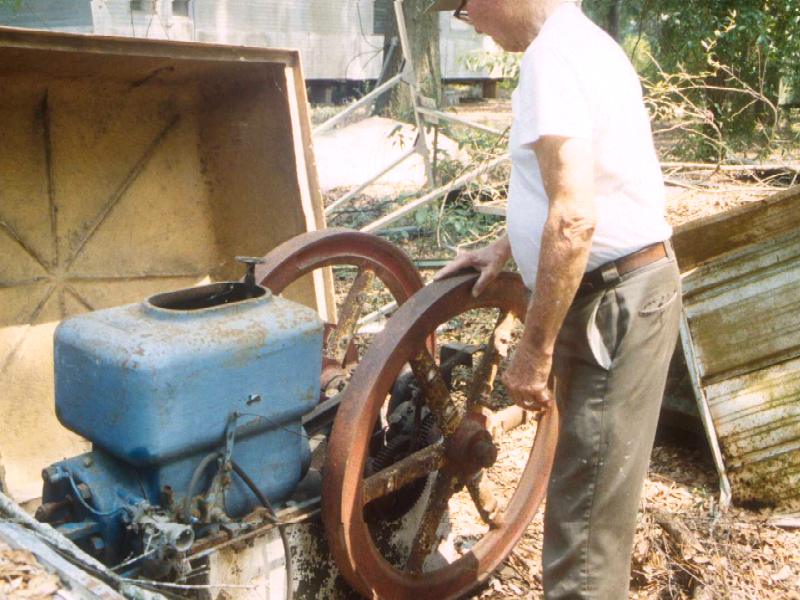
Pictured on the left is a relatively recent acquisition. At one time, it was belted up to the grist mill. I did not see a name on the engine, but a number plate was attached. I'd be pleased to add more information if someone supplies it. |
|
|
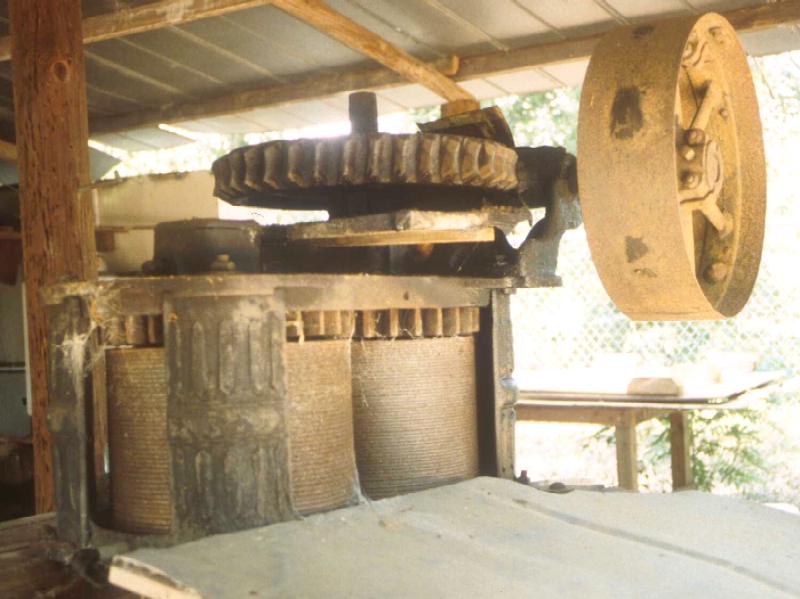
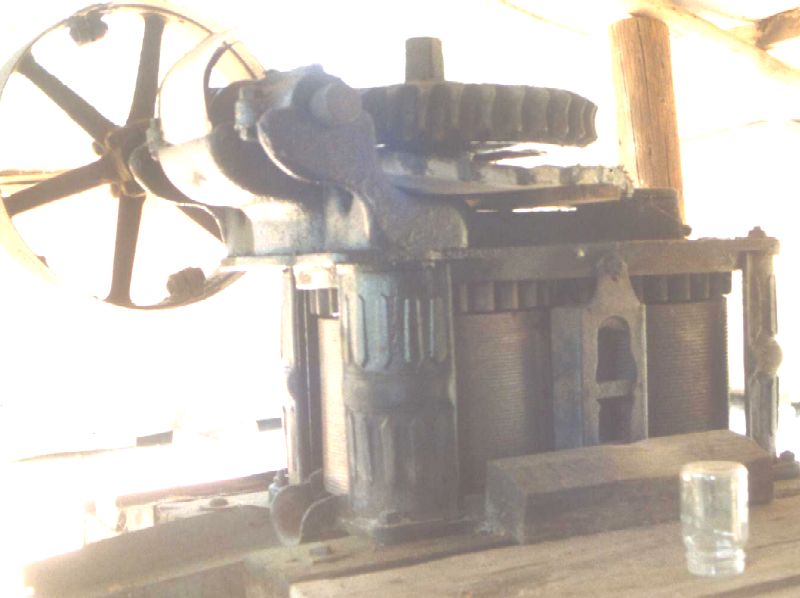
| Above pictures are of a 10x 14 mill made by DT Sutherland Machine Works of Bainbridge, GA. This is the first mill made by this company that I have seen, and it is also the first mill of its design that I seen face-to-face. I assume the gears and pulley are original, but Mr. Herold did not purchase it new, and the only writing was cast on the top plate. If you know anything about this mill, let me know and I'll ask Ken to update the page. Thanks. | |
|
|
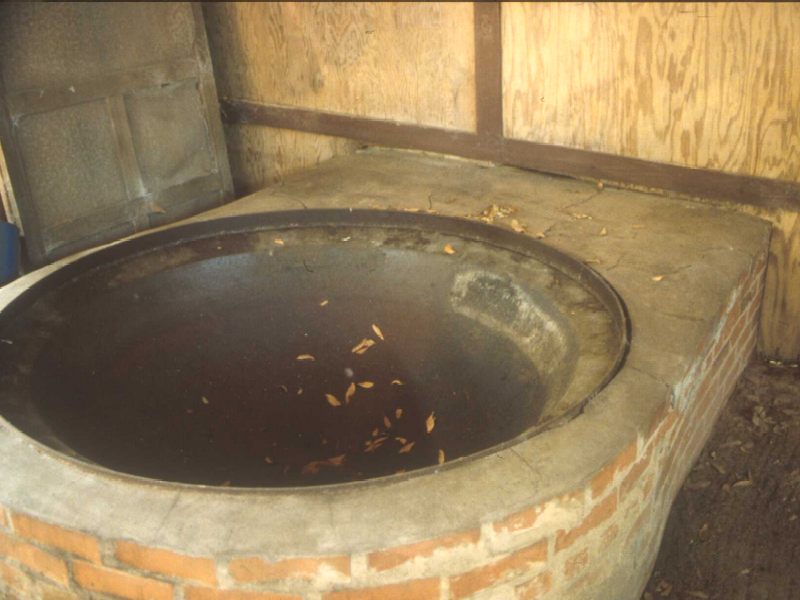
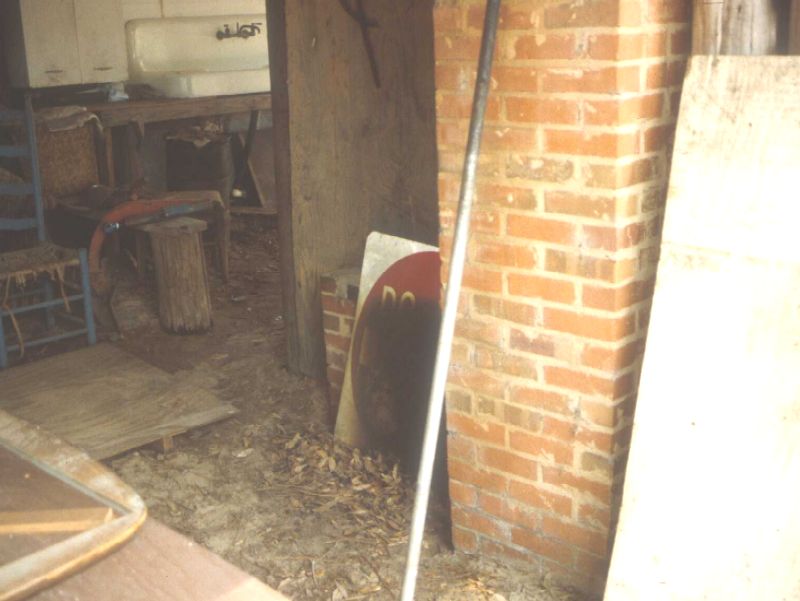
| Left above is the Chattanooga 100-gallon kettle that Mr. Herold cooks in. The firebox, right, has two grates. Mr. Herold starts heating the juice slowly with construction debris, but does his main cooking with fat lightwood, which was pulled from one of his properties. He mentioned that the firebox arrangement is not very satisfactory because of a problem with scorching: the fire is pulled around the kettle; as the nascent syrup cooks down, the kettle wall next to the firebox becomes too hot unless it is diligently cooled by continuously washing the syrup up on it. Mr. Herold pulls back the fire when the hygrometer reads 33, but the syrup is usually at 35 by the time that he dips it up. As an aside, Mr. Herold admonished me against the use of sodium nitrate as a fertilizer for cane as it makes the juice and syrup salty. | |