Chattahoochee Vignettes (Chattahoochee, FL) Chattahoochee is a small inviting panhandle town that is located on a manmade lake near the junction of Georgia, Florida, and Alabama. Although this land was farmed, it is sandy, droughty and generally of low agricultural potential, notwithstanding more promising land nearby. Some years ago, I had the opportunity to visit the noted amateur botanist Angus Gholson there, and I jumped at the opportunity to return. |
|
|
|
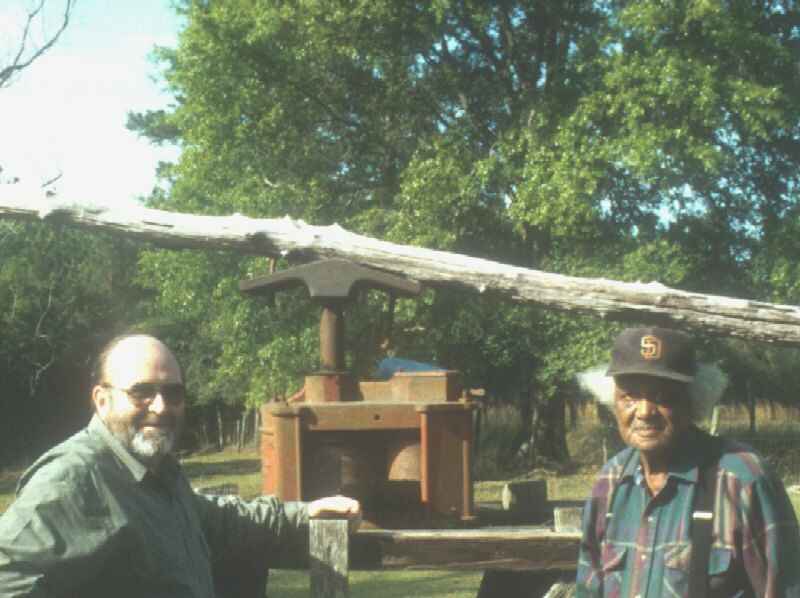
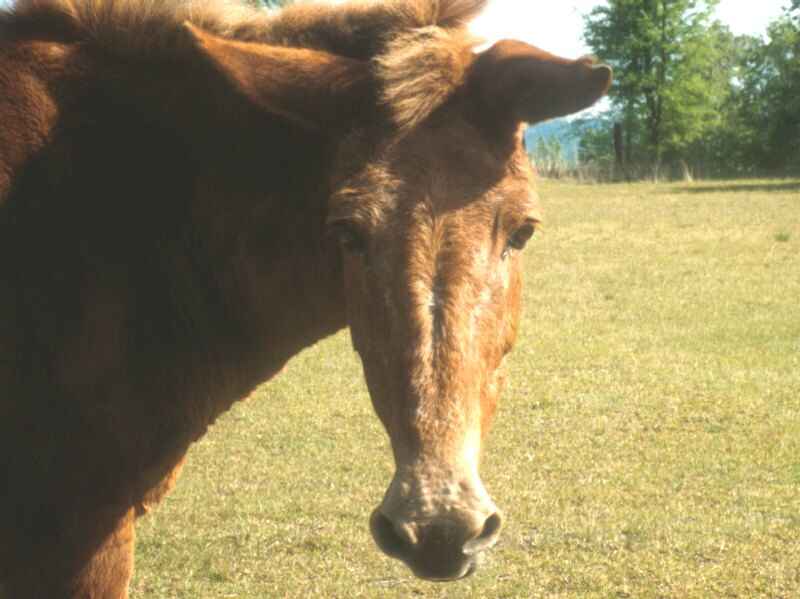
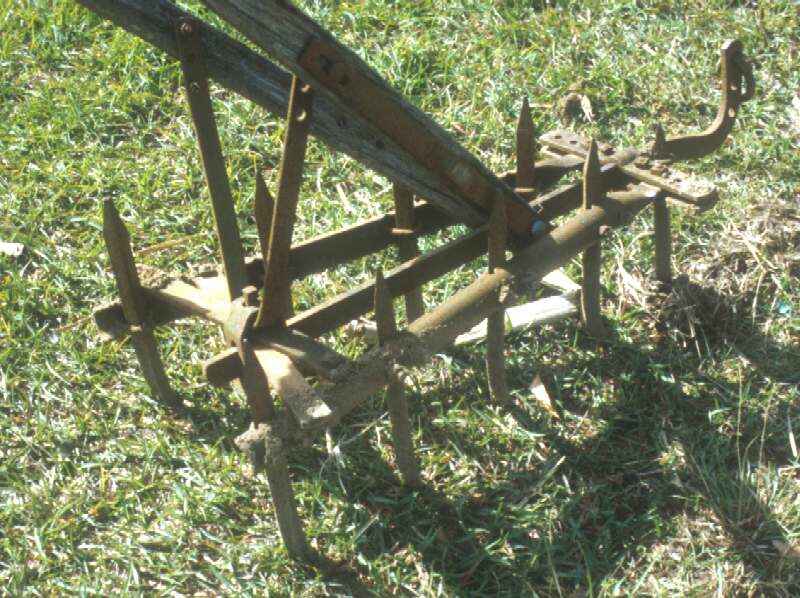
| Pictures 1-3 were taken on the farm of Mr. Richard Mashburn, the father of a senior Florida State University administrator, who arranged the visit. Mr. Mashburn (right) and I pose by his mill. Although Mr. Mashburn, 83, does not make syrup, he and Maggie, the mule, grind cane for juice and garden as evidenced by the weeder with fresh soil. Most of Mr. Mashburn's cleared land forms goat pasturage and sits atop a hill. With the lake visible on the horizon and Mr. Mashburn's welcoming smile, few places could feel more idyllic. | |
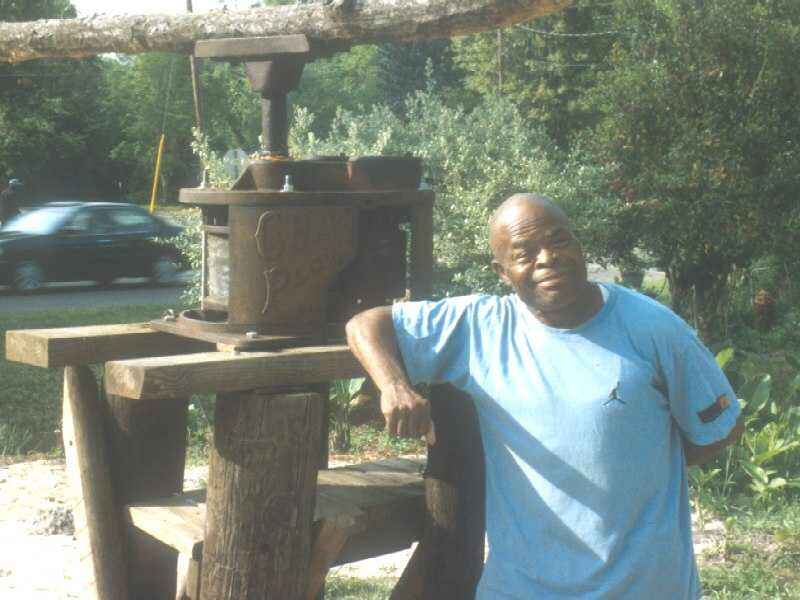 |
Mr. Frank Owens, a long-time friend of Mr. Mashburn, helped break Maggie to work nearly two decades ago. At 69, Mr. Owens is just getting into the syrup business and had only recently installed this mill at his residence in town. Mr. Owens could serve as inspiration for all of us: growing up poor in a broken home, Mr. Owens was sent away by his father to work. Not even being near the cusp of adulthood at 11, Mr. Owens found the circumstances hostile to his purposes, and he summoned the courage required to remove to Jacksonville, some 200 miles away. From this bleak beginning, he built a comfortable life, which I can only attribute to his inquisitiveness and unbridled passion for life. |
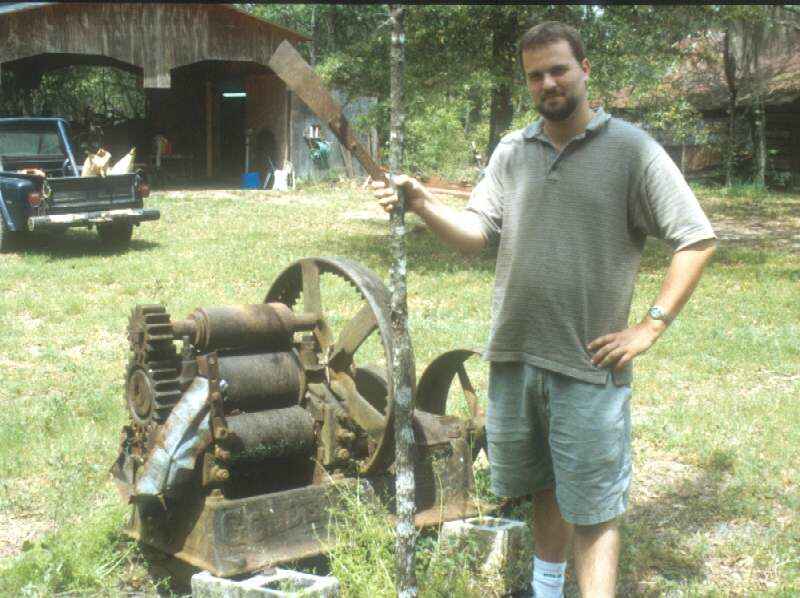 |
Mr. Hanley bought a farm where time has stood still. The home, which he is restoring, is made of wide cypress and was already on the tax rolls in 1896. My son, Will, poses with a Golden # 36 (parts not in their working order) and a cane knife. These two items, along with a frameless two-roller mill (cf. Agrirama page) and other tools from the past, were resting near where they were last used. |